Tổng số lượt xem trang
Thứ Bảy, 27 tháng 6, 2020
Thứ Năm, 25 tháng 6, 2020
Thứ Bảy, 13 tháng 6, 2020
Ultrasound for Primary Breast Screening
By Theresa Pablos, AuntMinnie staff writer
June 11, 2020 -- Could ultrasound be used as a primary screening method for breast cancer? A long-term systematic review published on June 1 in BMC Cancer found ultrasound scans performed well as both a primary and secondary cancer screening modality.
The review, conducted by researchers in China, pooled data from almost two dozen studies evaluating the effectiveness of ultrasound for breast cancer screening. Ultrasound screening performed comparably to mammography in most categories and may work particularly well as a screening method for women with dense breasts, the authors noted.
"Up to now, there have been no consistent conclusions concerning whether [ultrasound] screening should be recommended as the primary screening method for women in the screening guidelines for breast cancer," wrote lead authors Lei Yang and Shengfeng Wang from Peking University in Beijing.
Cancer detection, recall, and biopsy rates
The review included 23 English-language studies published between January 2003 and May 2018. Twelve of the studies evaluated the use of ultrasound as a secondary screening method after a negative mammography result, while the remaining 11 studies compared the effectiveness of ultrasound and mammography as primary screening modalities.
| Mammography vs. ultrasound for breast cancer screening | |||
| Mammography, primary screening | Ultrasound, primary screening | Ultrasound, secondary screening | |
| Cancer detection rate per 1,000 examinations | 4.6 | 4.6 | 3.0 |
| Recall rate | 4.6% | 5.9% | 8.8% |
| Biopsy rate | 1.5% | 2.3% | 3.9% |
| Percentage of all cancers detected | 65% | 68% | N/A |
| Percentage of invasive cancers detected | 65% | 87% | 74% |
The review found no statistically significant differences in sensitivity and specificity between ultrasound and mammography as primary breast cancer screening methods. Mammography detected 65% of cancers, comparable to the 68% of cancers detected through ultrasound scans. Similarly, mammography identified 97% of women without cancer, while ultrasound detected 98% of women without cancer.
Furthermore, both mammography and ultrasound identified 4.6 cancers per 1,000 examinations. Ultrasound scans detected significantly more invasive cancers than mammography, but the modality also resulted in a higher percentage of recalled patents. The researchers found no statistically significant differences between mammography and ultrasound for the percentage of biopsies or for detection of node-negative invasive cancers
When used as a secondary screening method after a negative mammogram result, ultrasound identified 96% of occult breast cancers and 93% of healthy patients. The modality also identified 3 cancers per 1,000 scans, with an 8.8% recall rate and a 3.9% biopsy rate. As a secondary screening method, ultrasound found 74% of invasive cancers and 71% of node-negative invasive cancers.
"Our study is the first systematic review and meta-analysis to investigate the performance of [primary ultrasound] screening for breast cancer, and that is also an important up-to-date systematic review and meta-analysis investigating the performance of [secondary ultrasound] screening," the authors wrote.
Benefits and limitations of ultrasound screening
Ultrasound has some benefits as a breast screening method, including that it is radiation-free and may be more accessible in low-resource countries and areas. However, it is also not without its limitations. For instance, ultrasound cannot image the whole breast at once or show microcalcifications, and it requires a skilled operator.
"However, as shown in our study, these concerns seemed not to cause significant differences in the sensitivity and specificity, or even in cancer detection rates and cancer characteristics between [primary ultrasound] screening and [primary mammography] screening," the authors wrote.
All of the studies in the review were graded as high or fair quality by the authors, but the review itself had some noteworthy limitations. Importantly, some of the ultrasound studies in the review included repeated screenings using the same group of individuals. For the analysis, the authors counted each screening as an individual person, which could have overestimated the benefit of ultrasound screening.
Despite its limitations, the authors noted the findings highlight the need for future studies to investigate the long-term benefits and risks of using ultrasound as a primary breast cancer screening method, particularly for use in women with dense breasts and those who live in rural or resource-poor areas.
"We hope that [ultrasound] screening for breast cancer should deserve more attention in the future, not only because [ultrasound] is comparable to [mammography] in women with dense breasts ... but also because ultrasound is not a radiation modality and is easier to access in low-resource areas, such as Chinese rural areas," the authors concluded.
LIVER 2D-SWE ARTIFACTS
Two-dimensional shear wave elastography artifacts, although seen very frequently in a clinical setting, are poorly recognized. Our review emphasizes that interpretation of 2D-SWE images must incorporate knowledge of US artifacts.
Thứ Năm, 11 tháng 6, 2020
ULTRASOUND and SARCOPENIA
ABSTRACT
Our
aim
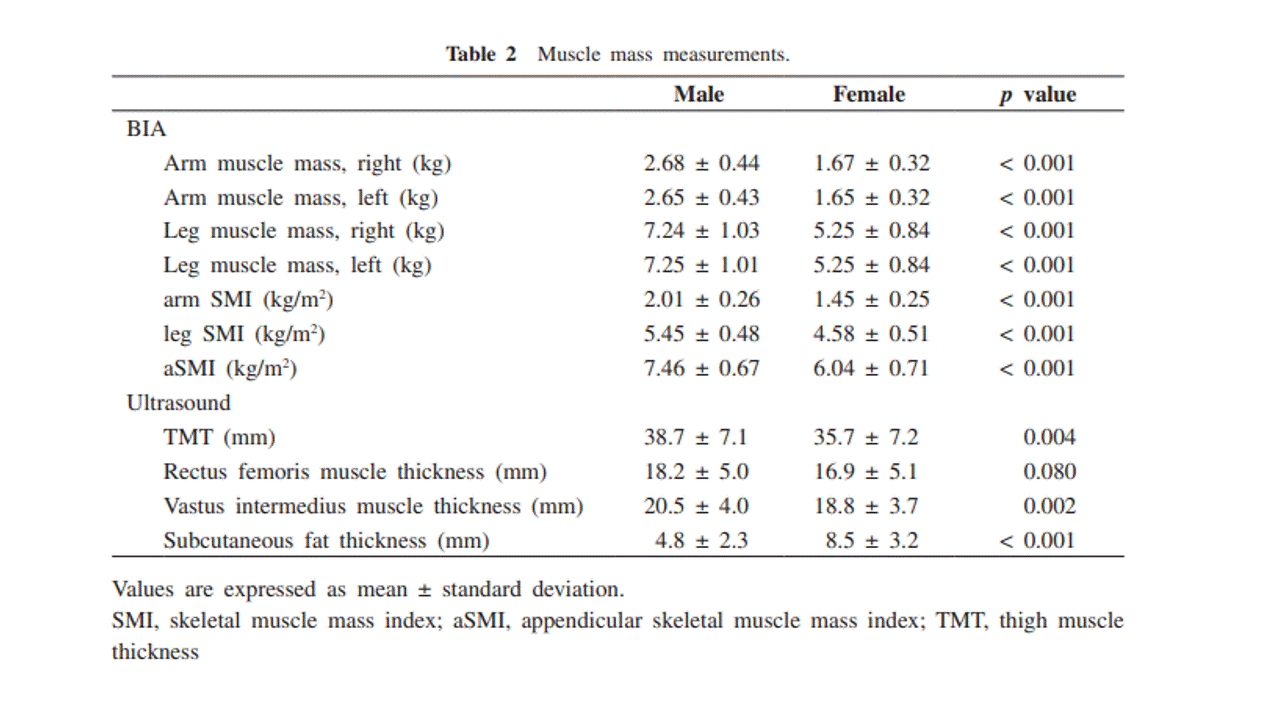
of this study is to compare the thigh muscle thickness measurements obtained
using ultrasound and bioelectrical impedance analysis (BIA) methods, and to
investigate the validity and cutoff value of the ultrasonography.
We
analyzed
a total of 201 participants (99 male and 102 female participants, mean age,
66.2 years) participated in the annual health checkup in the Yakumo
Study, 2014. Thigh muscle thickness (TMT, sum
of the rectus femoris and vastus intermedius muscle thickness)
was measured using ultrasound at mid-thigh in the sitting position.
Appendicular skeletal muscle mass (aSMI) was
measured using BIA. Cutoff value of TMT was determined through the receiver
operating characteristic analysis. We defined sarcopenia
with the diagnostic algorithm of Asian Working Group for Sarcopenia.
TMT
was
significantly reduced in subject with sarcopenia
than in those without sarcopenia in
both gender. Muscle measurements obtained using the BIA methods (aSMI)
and ultrasound methods (TMT) showed a significant correlation, with a
correlation coefficient of 0.38 (P < 0.001). Cutoff value, sensitivity, and
specificity of TMT in diagnosis of muscle loss were 36 mm, 72.0%, and 73.9%,
respectively, for the male participants, and 34 mm, 72.2%, and 72.4%,
respectively, for the female participants.
In
conclusion,
the ultrasonography for thigh muscle might be a simple diagnostic method for sarcopenia.
Keywords:
ultrasonography, thigh muscle thickness, sarcopenia,
community-dwelling people, cut-off value
Thứ Tư, 10 tháng 6, 2020
C B F in Neonatal Sepsis
Abstract
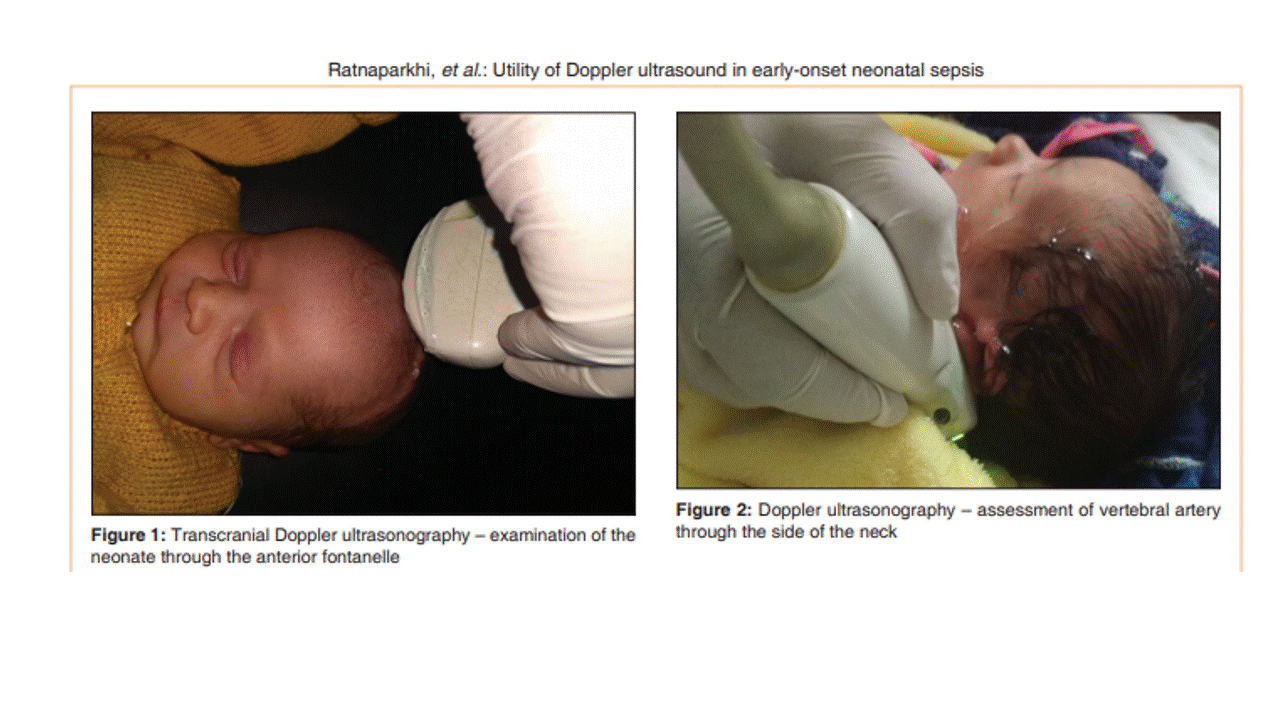
Background: Neonatal sepsis is an important cause of morbidity and mortality among newborns. As there is paucity of literature regarding early alteration of the cerebral blood flow (CBF) in neonatal sepsis our study aims to evaluate the changes in the CBF velocities and Doppler indices in neonates with early‑onset neonatal sepsis (EONS) and to evaluate the predictive accuracy of cerebral blood flow velocities (CBFV) by using ultrasound Doppler as a diagnostic marker of EONS.
Methods: This cross‑sectional analytical study was conducted over a period of 2 years with 123 neonates enrolled in the study. The neonates were divided into two groups: Group I (with 54 neonates) ‑ neonates with EONS and group II (with 69 neonates) ‑ age‑matched neonates without any signs of sepsis. Ultrasound Doppler examination was performed and the cerebral hemodynamics assessed in neonates during the first seventy two hours of life. Doppler indices and CBFV were measured in the internal carotid artery (ICA), middle cerebral artery (MCA), and vertebral artery (VA) of either side. Data were analyzed using the statistical program SPSS version 23.0 (SPSS Inc., Chicago, IL, USA). Sensitivity, specificity, positive predictive value (PPV), negative predictive value (NPV), and diagnostic accuracy were calculated at different selected cutoff values for CBFV parameters.
Results: Lower resistance and higher peak systolic velocity and end diastolic velocity have been documented in neonates with EONS.
Conclusion: Our study shows that the cerebral hemodynamics in neonates with EONS is altered which can be assessed bedside by noninvasive ultrasound Doppler examination.
Background: Neonatal sepsis is an important cause of morbidity and mortality among newborns. As there is paucity of literature regarding early alteration of the cerebral blood flow (CBF) in neonatal sepsis our study aims to evaluate the changes in the CBF velocities and Doppler indices in neonates with early‑onset neonatal sepsis (EONS) and to evaluate the predictive accuracy of cerebral blood flow velocities (CBFV) by using ultrasound Doppler as a diagnostic marker of EONS.
Methods: This cross‑sectional analytical study was conducted over a period of 2 years with 123 neonates enrolled in the study. The neonates were divided into two groups: Group I (with 54 neonates) ‑ neonates with EONS and group II (with 69 neonates) ‑ age‑matched neonates without any signs of sepsis. Ultrasound Doppler examination was performed and the cerebral hemodynamics assessed in neonates during the first seventy two hours of life. Doppler indices and CBFV were measured in the internal carotid artery (ICA), middle cerebral artery (MCA), and vertebral artery (VA) of either side. Data were analyzed using the statistical program SPSS version 23.0 (SPSS Inc., Chicago, IL, USA). Sensitivity, specificity, positive predictive value (PPV), negative predictive value (NPV), and diagnostic accuracy were calculated at different selected cutoff values for CBFV parameters.
Results: Lower resistance and higher peak systolic velocity and end diastolic velocity have been documented in neonates with EONS.
Conclusion: Our study shows that the cerebral hemodynamics in neonates with EONS is altered which can be assessed bedside by noninvasive ultrasound Doppler examination.
Thứ Sáu, 5 tháng 6, 2020
PoCUS for Syncope
Point-of-care ultrasound to complete physical exam and to reach the diagnosis in a young man with syncope
The Ultrasound Journal volume 12
Abstract
Background
Cardiac syncope can result from an atrial myxoma due to outflow obstruction. Myxoma is the most common primary cardiac tumor that may cause sudden death and the nonspecific symptoms may make early diagnosis difficult.
Case presentation
A 27-year-old man presented to our emergency department after two episodes of syncope and severe fatigue. He had no complaint of fever, weight loss, sweating, chest pain or dyspnea. Vital signs were within normal limits. A loud heart S1 was detected and normal neck veins. Other systemic examinations including neurological assessment were normal. Electrocardiography showed normal sinus rhythm. An obvious variability in heart rate was noticed on cardiac monitor changing by the patient’s position. Point-of-care ultrasonography (PoCUS) showed a large hyperechoic lesion with a well-defined stalk originating from the left atrium (LA). Thus, the patient was transferred to a cardiac surgery center for surgical intervention. Histopathology reported an LA mass compatible with myxoma.
Conclusions
Emergency physicians should be familiar with the vague presentations of cardiac tumors to improve patient outcomes. It is beneficial to take advantage of bedside ultrasound for prompt diagnosis and subsequent treatment.
Feasibility of renal resistive index
Feasibility of renal resistive index measurements performed by an intermediate and novice sonographer in a volunteer population
The Ultrasound Journal volume 12
Abstract
Background
The Doppler-derived renal resistive index (RRI) is emerging as a promising bedside tool for assessing renal perfusion and risk of developing acute kidney injury in critically ill patients. It is not known what level of ultrasonography competence is needed to obtain reliable RRI values.
Objective
The aim of this study was to evaluate the feasibility of RRI measurements by an intermediate and novice sonographer in a volunteer population.
Methods
After a focused teaching session, an intermediate (resident), novice (medical student) and expert sonographer performed RRI measurements in 23 volunteers consecutively and blinded to the results of one another. Intraclass correlation coefficients and Bland–Altman plots were used to evaluate interobserver reliability, bias and precision.
Results
Both non-experts were able to obtain RRI values in all volunteers. Median RRI in the population measured by the expert was 0.58 (interquartile range 0.52–0.62). The intraclass correlation coefficient was 0.96 (95% confidence interval 0.90–0.98) for the intermediate and expert, and 0.85 (95% confidence interval 0.69–0.94) for the novice and expert. In relation to the measurements of the expert, both non-experts showed negligible bias (mean difference 0.002 [95% confidence interval − 0.005 to 0.009, p = 0.597] between intermediate and expert, mean difference 0.002 [95% confidence interval − 0.011 to 0.015, p = 0.752] between novice and expert) and clinically acceptable precision (95% limits of agreement − 0.031 to 0.035 for the intermediate, 95% limits of agreement − 0.056 to 0.060 for the novice).
Conclusions
RRI measurements by both an intermediate and novice sonographer in a volunteer population were reliable, accurate and precise after a brief course. RRI is easy to learn and feasible within the scope of point-of-care ultrasound.
AA in Patient < 50years of age
Abstract
Introduction
Practitioners of US routinely include a survey of the abdominal aorta during abdominal US in accordance with international guidelines. Such practice is of uncertain value in younger patients.
Results
The most common indications for US were abdominal pain (1337, 44%), deranged liver function tests (453, 15%), nausea and/or vomiting (229, 8%), elevated inflammatory markers (146, 5%), pancreatitis (134, 4%) and pyrexia (127, 4%). Fewer than half (977, 49%) of the reports contained a comment regarding the aorta. Aortic pathology was reported in 2 (0.1%) cases. Both were reported as aortic ectasia and both represented a false‐positive diagnosis. One male patient had a known abdominal aortic aneurysm with endovascular aortic repair. No new aortic aneurysms were found. All cases of atherosclerotic disease were ignored, and none were reported. Periaortic pathology was encountered on 1 patient, but this was known. No case of new periaortic pathology was detected.
Thứ Tư, 3 tháng 6, 2020
US autopsies help doctors understand COVID-19
By Theresa Pablos, AuntMinnie staff writer
June 3, 2020 -- A hospital in São Paulo used a portable ultrasound machine to perform autopsies on 10 patients with fatal cases of COVID-19. The authors described the modality's benefits for studying the effects of the disease caused by the novel coronavirus in a paper published on May 22 in Histopathology.
Using a technique called ultrasound-based minimally invasive autopsies (MIA-US), an ultrasound examiner and technologist took tissue samples from the most affected parts of each patient's organs. The findings confirmed that COVID-19 affects multiple organs and tissues, including the kidneys, spleen, lymph nodes, brain, testicles, and skin.
The ultrasound team also wore head-to-toe personal protective equipment, including two aprons, rubber boots, plastic sleeves, three glove layers, a rubber cap, an N95 mask, a surgical mask, and eye protection.
During the autopsies, the examiner and technologist used a portable ultrasound machine with multifrequency broadband transduces and standard image quality. They scanned patients' organs to identify the most-affected locations, then cut 10-cm openings at the appropriate locations to take ultrasound-guided tissue samples from the lung, liver, kidneys, spleen, and heart. They also took unguided samples from the quadriceps, skin, and brain.
The samples revealed significant lung findings, including exudative and/or proliferative diffuse alveolar damage. The authors also found severe alveolar epithelial changes, which they described as more intense and prevalent than findings for other respiratory viruses.
Many but not all findings outside of the lungs could be attributed to the comorbidities of the patients or to septic shock, the authors noted. For instance, eight patients had fibrinous thrombi in alveolar arterioles and a high density of alveolar megakaryocytes, which the authors believed could be evidence of a hypercoagulative state in severely ill patients. The researchers also found cases with superficial perivascular dermatitis, myositis, orchitis, and myocarditis.
Đăng ký:
Bài đăng
(
Atom
)