Tổng số lượt xem trang
Chủ Nhật, 26 tháng 5, 2019
US and BREAST TUMOR SIZE
Abstract
Aims: To determine the factors influencing ultrasound breast tumor size assessment accuracy. Material and methods: Five factors (tumor type, molecular subtype, histological size, histological grade, and breast density) were used to assess the measurement accuracy of breast ultrasound in tumor size. Size underestimation was defined as ultrasound index lesion diameter < histological size by at least 5 mm.
Results: Breast ultrasound underestimated tumor size significantly, especially in cases with intraductal components (p=0.002). There was a tendency for higher size underestimation in breast cancer tumors with high–histological grade (p=0.03), human epidermal growth factor receptor type 2 (HER2)-overexpressing breast cancer tumors (p=0.02) and hormone receptor (HR)−/HER2+ breast cancer tumors (p=0.008). Furthermore, core biopsy revealed higher probability of size underestimation with intraductal components (p=0.002). Size underestimation was more frequent with larger histological size (p <0 .001="" breasts.="" breasts="" compared="" dense="" in="" masses="" nbsp="" non-dense="" p="" significantly="" to="" underestimated="" were="">Conclusions: The size underestimation was influenced by pathological type, molecular subtype, and histological size. The pathological results of core biopsy were conducive for predicting tumor size pre-surgery in precise breast cancer diagnosis.
Keywords: breast cancer; ultrasound; tumor size; molecular subtype; core biopsy
0>
Thứ Bảy, 25 tháng 5, 2019
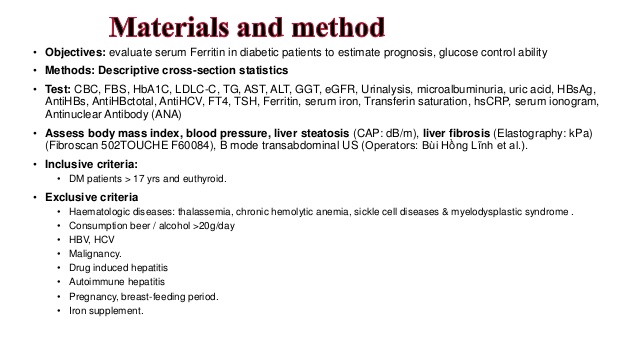
EVALUATION of HYPERFERRITINEMIA in DIABETIC PATIENTS
https://www.slideshare.net/hungnguyenthien/evaluation-of-hyperferritinemia-in-diabetic-patients
Hyperferritinemia with normal transferrin saturation, with or without iron overload is
often found in patients with hepatic steatosis and/or hepatitis. The metabolic
hyperferritinaemia (disorder of iron and glucose and/or lipid metabolism) may occur with the i
ncidence up to 49% in type 2 diabetes mellitus patients.
Hyperferritinemia with normal transferrin saturation, with or without iron overload is
often found in patients with hepatic steatosis and/or hepatitis. The metabolic
hyperferritinaemia (disorder of iron and glucose and/or lipid metabolism) may occur with the i
ncidence up to 49% in type 2 diabetes mellitus patients.
Thứ Bảy, 18 tháng 5, 2019
Shear-wave elastography helps diagnose Graves' disease
By Kate Madden Yee, AuntMinnie.com staff writer
April 24, 2019 -- Shear-wave elastography (SWE) is an effective additional tool to complement conventional ultrasound for diagnosing Graves' disease, since it can characterize the tissue stiffness of the thyroid gland, according to a new study published in the May issue of the American Journal of Roentgenology.
The findings support the use of SWE to gather more information about thyroid tissue stiffness than may be possible with conventional ultrasound alone, wrote a team led by Dr. Shimei Li of Sun Yat-Sen University in Guangzhou, China.
"Conventional ultrasound can provide a variety of information, such as size, morphologic features, borders, internal echo characteristics, presence or absence of nodules, and blood flow conditions," the group wrote. "Recently, SWE has been proposed as a complementary technology to conventional ultrasound that can help provide tissue stiffness information. It not only provides a new reference index for the diagnosis of Graves' disease but also helps to monitor the changes in thyroid stiffness in different stages of disease progression."
Graves' disease tends to present in younger people and prompts overactivity of the thyroid gland, the team wrote. Ultrasound has long been used to diagnose the condition, revealing disease features such as an enlarged thyroid gland, diffuse limited hypoechogenicity, and intralesional vascularization on color Doppler (AJR, May 2019, Vol. 212:5, pp. 950-957).
But ultrasound elastography offers additional information about the thyroid gland's tissue stiffness, making SWE more objective than palpation, which is the typical manner of characterizing the tissue, the authors noted.
Li's group included 207 patients in the study. Of these, 162 had Graves' disease and 45 were healthy. All patients underwent an SWE exam that recorded three elasticity values in kilopascals (kPa) for each thyroid gland: SWE mean, SWE minimum, and SWE maximum.
The researchers found that the SWE elasticity values were higher in patients with Graves' disease than in healthy subjects.
| SWE elasticity values in patients with Graves' disease | ||
| Measure | Healthy subjects | Subjects with Graves' disease |
| SWE mean | 14.3 ± 2.7 kPa | 17.6 ± 6.4 kPa |
| SWE minimum | 8.4 ± 2.4 kPa | 10.7 ± 6.4 kPa |
| SWE maximum | 22.1 ± 5.4 kPa | 25.6 ± 10.6 kPa |
The team also found that the duration of disease, thyroid size, and isthmus thickness, as well as levels of thyroid peroxidase, thyroglobulin, and thyrotropin receptor antibodies correlated with SWE mean in patients with the disease.
It's possible that the results could help clinicians forecast how patients will respond to treatment, according to the group.
"Perhaps [assessing] the thyroid stiffness before treatment could predict the outcome of [radioactive iodine] treatment in patients with Graves' disease," the authors concluded.
Shear-wave elastography useful for assessing rectal tumor depth
By Kate Madden Yee, AuntMinnie.com staff writer
May 17, 2019 -- Shear-wave elastography (SWE) is a useful way to evaluate the depth of invasion of rectal tumors, offering clinicians another tool for preoperative surgery staging, according to a study published online May 10 in Ultrasound in Medicine and Biology.
Accurate staging of rectal cancer before surgery provides the crucial information needed to select appropriate treatment, and SWE can be used as an adjunct to traditional staging modalities such as endorectal ultrasonography (ERUS), wrote a team led by Dr. Zhihui Fan and colleagues of Peking University Cancer Hospital and Institute in Beijing.
"Shear-wave elastography can provide quantitative indicators of the depth of invasion of rectal tumors," the researchers wrote. "This method is tolerable, noninvasive, and easy to perform."
Increasing incidence
Rectal cancer is a common gastrointestinal disease, and its incidence continues to increase, according to Fan's group. The depth of the invasion of rectal cancer is a key prognostic factor and affects clinical treatment options, making preoperative staging crucial. Traditionally, this staging has been performed using ERUS or MRI, each of which has its limitations, according to the authors.
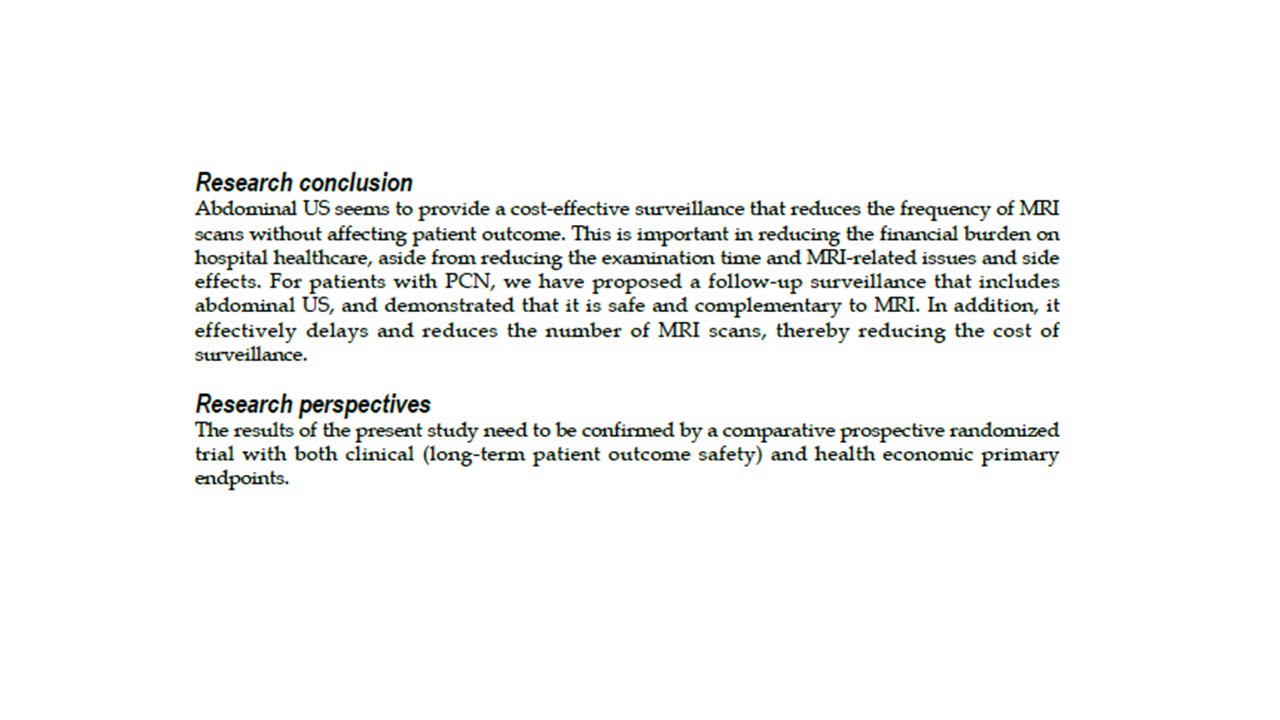
"MRI visualizes the rectal wall involved in rectal cancer adequately, but the examination time is long and the cost is high," the group wrote. "ERUS can visualize the structure of the different layers of the rectal wall clearly and determine the depth of tumor invasion, and the cost is low. ... Although the accuracy rate of ERUS is relatively high, there are still too many cases of overstaging or understaging. In addition, cancer staging by ERUS is heavily dependent on the operator's experience."
Use of SWE has increased, primarily for liver, breast, thyroid, and cervical lesions, but also for assessing prostate lesions. It's beneficial in characterizing tissue stiffness, and cancer tissue tends to be stiffer than healthy tissue. Yet SWE's utility for evaluating preoperative rectal cancer staging has not been studied. So Fan's team investigated the technique's value for this application compared with ERUS and MRI.
The study included 55 patients with rectal cancer who underwent ERUS, SWE, and MRI exams between September 2016 and April 2018. The average distance of each tumor from the anal verge was 6.9 cm. The average length was 3.1 cm and thickness 1.4 cm. All patients had undergone surgery, so the researchers used pathologic results as the gold standard for each modality/technique's performance.
Fan and colleagues found that SWE's overall concordance rate with pathologic stage was better than ERUS or MRI -- although the differences were not statistically significant, which the team attributed to the study's small sample size.
| Performance of ERUS, MRI, and SWE for assessing rectal cancer lesion depth | |||
| ERUS | MRI | SWE | |
| Rate of concordance | 78.2% | 74.6% | 85.5% |
What was statistically significant, however, was SWE's characterization of lesion stiffness by cancer stage: tumor stiffness increased as T-stage increased (p < 0.001).
Finally, the study found that among 27 cases of T1 rectal cancer, four ERUS cases and 10 MRI cases were overstaged; among 18 cases of T3 and T4 rectal cancer, eight ERUS cases and three MRI cases were understaged, according to the authors.
"At present, overstaging and understaging occur with both ERUS and MRI, which may result in unnecessary therapy or loss of opportunity for neoadjuvant therapy," they wrote.
Promising adjunct
Shear-wave elastography offers clinicians important rectal cancer treatment staging information, especially in cases with uncertain diagnosis, Fan and colleagues noted. But SWE should serve as a supplement to ERUS, not a replacement for it.
"A combined evaluation strategy, giving play to the strengths of the two methods, may be more sensible," they wrote.
More research is needed, according to the team.
"SWE is noninvasive, real-time, and inexpensive compared with MRI. It can provide quantitative diagnostic indicators and may be used as a supplement to conventional ultrasound," the group wrote. "To validate our findings, prospective studies with large samples are needed."
Đăng ký:
Nhận xét
(
Atom
)