Tổng số lượt xem trang

Thứ Năm, 12 tháng 8, 2021

Acute Hepatitis Caused by Asymptomatic COVID-19 Infection

 A 30-years old woman was admitted at the emergency department for mild fever, anosmia and dysgeusia from 10 days. She denied cough, sore throat, shortness of breath, diarrhea, nausea, vomiting, or abdominal pain. Her parents and an uncle were diagnosed positive for COVID-19 infection in the previous three days. She did not have any chronic disease and she was not taking any drug at the time of admission. A nasopharyngeal swab was promptly done and RT-PCR resulted positive for COVID-19 infection. Chest X-ray did not show findings compatible with interstitial pneumonia; arterial oxygen saturation was 99% on room air. On presentation, her temperature was 36 °C. There were no cutaneous manifestations, her lung examination was normal, and there was no jaundice, right upper quadrant tenderness, hepatomegaly, or splenomegaly. Laboratory results were as follows: AST 1531 IU/L (normal value < 35), ALT 893 IU/L (normal < 36), serum bilirubin 1.02 mg/dL (normal < 1.2), alkaline phosphatase 106 IU/L (normal 33–98), INR 1, gammaglutamiltransferase 1276 IU/L (normal < 40), white blood cells 4070 cells/mm3 (normal 4000–10,000), platelets 152,000 cells/mm3 (normal 150,000–450,000). She denied recent intake of reliever drugs as paracetamol or antibiotics in the previous weeks. 

The abdominal ultrasound did not show significant abnormalities of liver, gallbladder, kidneys, spleen, pancreas and abdominal vessels

The following serological tests were performed and all were negative: hepatitis A, B, C, E, Cytomegalovirus, EpsteinBarr and respiratory viral panel. Blood cultures for bacteria and fungi, and the screening for autoimmune diseases were also negative. She was then treated with infusion of saline solution 0.9% (1500 cc/daily) with progressive reduction of liver abnormalities. In particular, after 3 days laboratory results were: AST 111 IU/L, ALT 89 IU/L, alkaline phosphatase 97 IU/L and gammaglutamiltransferase 246 IU/L. No respiratory symptom occurred during follow-up and the patient was discharged after 5 days of hospitalization, in good clinical condition and asymptomatic from both hepatic and respiratory point of view. At our knowledge, this is the first report of COVID-19 infection presenting as acute hepatitis in absence of respiratory symptoms. Our patient had very mild symptoms related to COVID-19 infection and was only tested due to her familiar cluster. Other possible causes of liver abnormalities were ruled out, therefore it seems likely that acute hepatitis was directly caused by COVID19. Recently, Wander et al.8 described a non-icteric, acute hepatitis in an HIV-infected woman, but their patient developed overt respiratory symptoms in the hours immediately following diagnosis and also had other possible causes of liver tests abnormalities such as the use of concomitant drugs and a fair number of co-morbidities. Mild-to moderate liver test abnormalities are becoming a frequent finding in subjects admitted to hospital for COVID-19 infection. Patients with known risk factors for COVID-19 infection presenting with acute hepatitis should be rapidly isolated and tested. In our patient, the abnormalities in liver function tests quickly normalized, in absence of specific therapy. The real meaning of liver tests transient alterations has yet to be determined in COVID19 infected subjects. With the future evolution of the pandemic, prospective observations could provide further information on this specific clinical issue. 

References 

[1]. Chen N, Zhou M, Dong X, Qu J, Gong F, Han Y, et al. Epidemiological and clinical characteristics of 99 cases of 2019 novel coronavirus pneumonia in Wuhan, China: a descriptive study. Lancet 2020;395:507–13.

 [2]. Rothe C, Schunk M, Sothmann P, Bretzel G, Froeschl G, Wallrauch C, et al. Transmission of SARS-CoV-2 infection from an asymptomatic contact in Germany. N Engl J Med 2020;382:970–1. 

[3]. Holshue ML, DeBolt C, Lindquist S, Lofy KH, Wiesman J, Bruce H, et al. First case of 2019 novel coronavirus in the United States. N Engl J Med 2020;382:929–36.

[4]. Huang C, Wang Y, Li X, Ren L, Zhao J, Hu Y, et al. Clinical features of patients infected with 2019 novel coronavirus in Wuhan, China. Lancet 2020;395:497–506. 

[5]. Phipps MM, Barraza LH, LaSota ED, Sobieszczyk ME, Pereira MR, Zheng EX, et al. Acute Liver Injury in COVID-19: prevalence and association with clinical outcomes in a large US cohort. Hepatology 2020 Online ahead of print. doi:10.1002/hep.31404.

 [6]. Wang Y, Liu S, Liu H, Li W, Lin F, Jiang L, et al. SARS-CoV-2 infection of the liver directly contributes to hepatic impairment in patients with COVID-19. J Hepatol 2020 May 11;S0168-8278(20)30294-4. doi:10.1016/j.jhep.2020.05.002. 

[7]. Kunutsor SK, Laukkanen JA. Hepatic manifestations and complications of COVID-19: a systematic review and metanalysis. J Infect 2020;81(3):e72–4. doi:10.1016/j.jinf.2020.06.043. 

[8]. Wander P, Epstein M, Bernstein D. COVID-19 presenting as acute hepatitis. Am

COVID-19 INDUCED HEPATITIS [C I H]


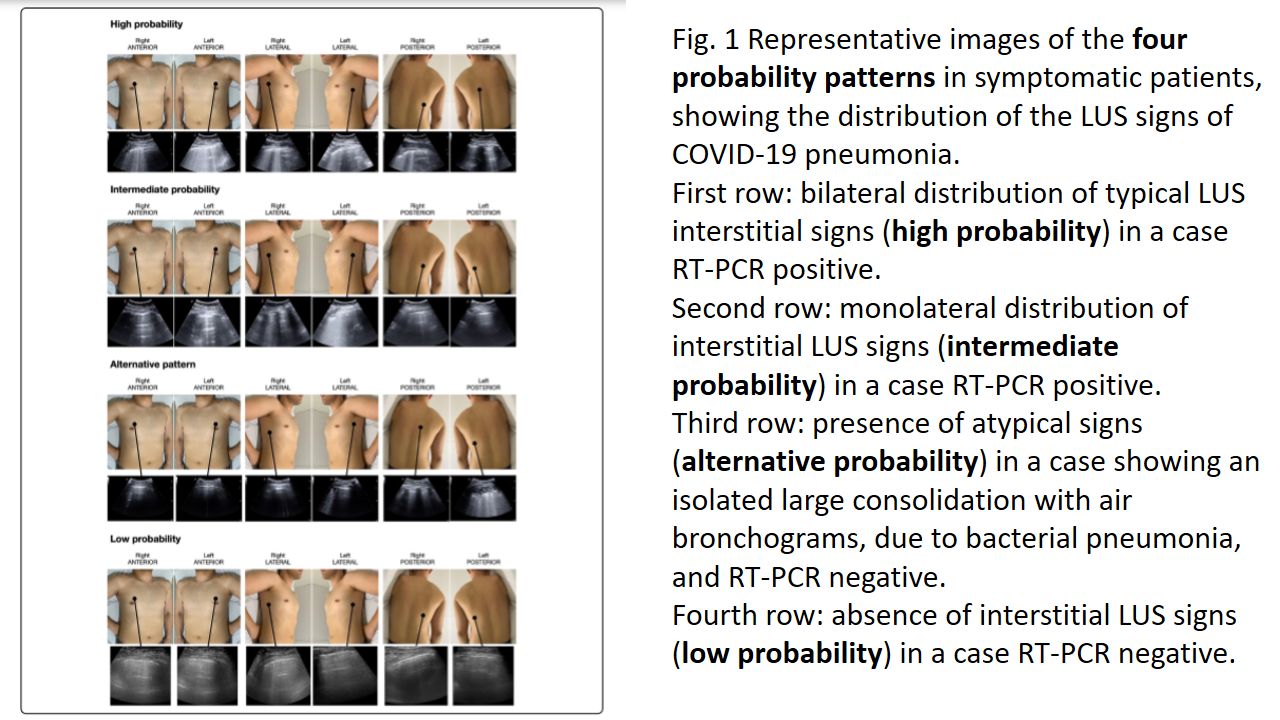
Lung US for the Early Diagnosis of COVID-19 Pneumonia


Chủ Nhật, 8 tháng 8, 2021

TẮC NHÁNH TĨNH MẠCH MẮT và BIỂU HIỆN NHÃN CẦU Ở BN COVID-19


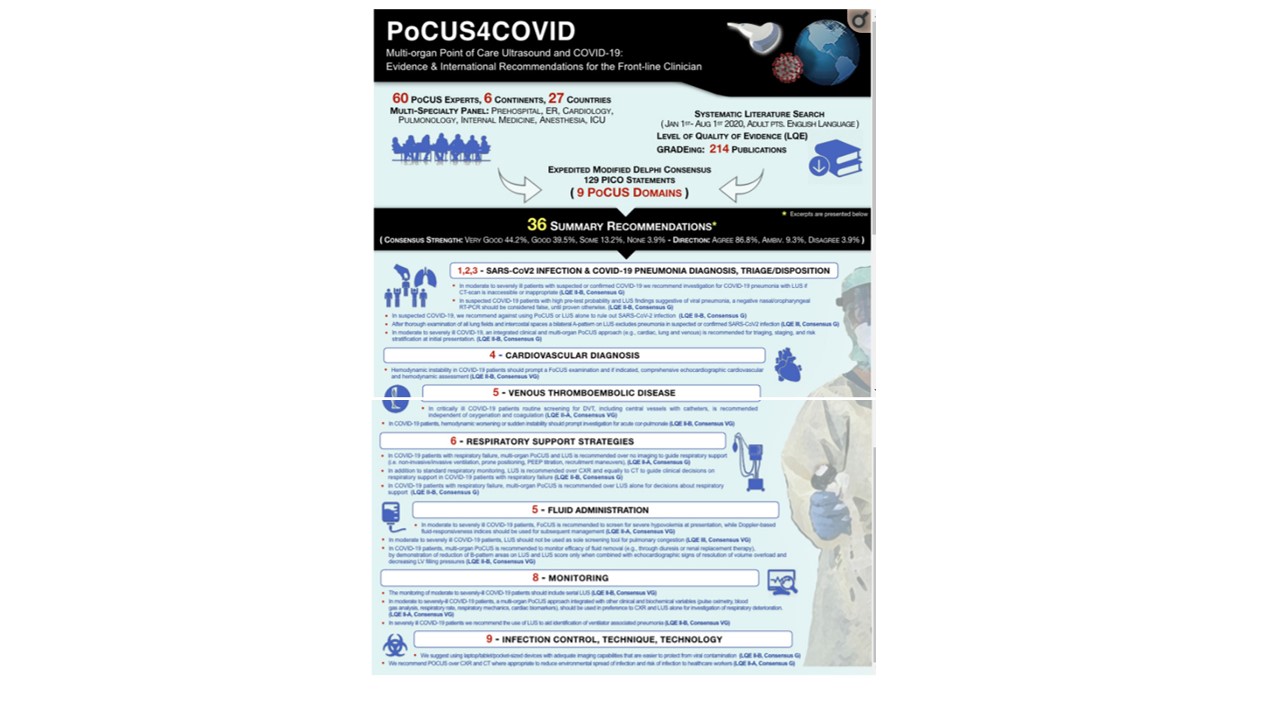
MULTI-ORGAN POC-US for COVID-19


Poc U S and COVID-19


Confluent B-lines tạo nên WATERFALL SIGN [dấu thác nước] tương đồng với dấu LIGHT BEAM [chùm sáng] hay shining white lung= phổi trắng sáng.


Thất P giãn nếu không do suy tim là dấu tiên lượng hiện tượng hypercoagulation ở bệnh nhân nhiễm COVID-19
Thất T mất chức năng ở 1/3  bệnh nhân myocarditis và cardiogenic shock, pericarditis 
acute myocardial infarctions {www.ncbi.nlm.nih.gov/pmc/articles/PMC7847790/pdf/jcvi-29-60.pdf}


Thứ Sáu, 6 tháng 8, 2021

GUT-BRAIN-LUNG AXIS DYSREGULATION in SARS-COV-2


SIÊU ÂM PHỔI [LUS] TRONG MÙA DỊCH COVID-19


B-lines 

The “comet-tail” ultrasonographic sign was first described by Ziskin and colleagues in 1982 when an intrahepatic shotgun pellet was observed to create an artifact like what is seen in lung comets. 

B-lines are not to be confused with normal comet-tail artifacts that originate at the pleura but fade before reaching the edge of the screen (Figure 8). The B-lines are vertical, highly dynamic, hyperechoic artifacts originating from the pleura or consolidation areas. These lines indicate accumulation of fluid in the pulmonary interstitial space (“lung rockets”) or alveoli (“ground glass”). 

Multiple B-lines are associated with pulmonary edema of cardiogenic and noncardiogenic  or mixed origin. They occur when sound waves pass through the superficial soft tissues and cross the pleural line encountering a mixture of air and water. One or two B-lines are not too concerning but when they increase in number or spread out in one zone, they are an indication of lung interstitial syndrome (Figures 9–10).


How are you using ultrasound to assess COVID-19 patients in your practice? 

Prof. Chao: The answer depends on the different condition. Once a patient develops symptoms such as a cough, fatigue or fever, the most important thing is to focus on what is happening in the lungs. Most patients will have a favorable prognosis, but about 10 percent will become worse. To help determine prognosis in this phase, lung ultrasound is easier (than X-ray, CT scan or a laboratory test) under conditions of high patient volume and low resources. Ultrasound is also helpful to follow the patient’s condition, recording the lung images for the patient in the machine and comparing from one exam to the next.
Prof. Wang: I also want to point out that looking at the other organs – the kidneys, the liver and the heart – is very important. COVID-19, because of low oxygen, will affect those organs. Echocardiography is an important part of critical care ultrasound because the heart is the center of oxygen transport. So, timely and routine echocardiography examination for the patient is very important. For the kidney, we look at it with imaging, with color and with Doppler. Even in traditional sepsis, the secondary injury is also important, and we need to pay more attention to it.
Dr. Jalil: When I’m putting a probe on a patient, it’s usually after I’ve talked to them or am trying to figure out what’s going on. I’m trying to add ultrasound to my physical exam. On the ventilator you can look at the compliance of the lungs, you can look at trends. Another way is looking at bilateral B-lines. It can tell you which direction the lungs are going and if the treatment is helping or not.
Dr. Villén: I look at three particular things: B-lines, subpleural consolidations and the thickness of the pleural line. In my opinion, the most sensitive places to put the probe and find something is the posterior below the arm and the axillar point. If you find just subpleural consolidation posterior, probably these are related to mild disease. Keep in mind this is a quite new virus for us. We are learning every day. 

How are you using ultrasound to scan the lungs of COVID19 patients? 

Prof. Wang: Lung ultrasound is very important in monitoring the lung deterioration in COVID-19 patients, especially for critical patients. ICU doctors have learned that critical care ultrasonography can be used to manage and monitor the lungs of critical COVID patients. We have two methods of monitoring these patients. ICU doctors are using lung ultrasound at the very beginning [when patients are admitted] and when patients are critical, like respiratory and circulatory issues.
Dr. Villén: The findings in lung ultrasound of patients with COVID-19 or any other viral pneumonia is based on three findings: 1) The subpleural consolidations, which is an area of small pneumonia in the border of the lung. Generally, it's triangular with a base with the pleura and the vortex pointed towards the lung; 2) The B-lines--so, an appearance which indicates no edema--in this case there is no fluid. It’s not a matter of fluid, but a matter of initial inflammation which cells fiber;  3) A thickened pleura, which is kind of the same of the subpleural consolidation, but it's more related to an area not a small spot.
In my opinion, the most sensitive places to put the probe and find something is in the posterial, below the arm and the axillar point – they are the most sensitive and not common when performing a lung examination. Most subpleural consolidations are posterior or between lateral and posterior and these are not normal points we normally use for lung examination. And the anterior chest is only affected in severe patients in my experience. If you move only into the anterior lateral, you will not find anything if the patient has coronavirus. So, you will go posterior for more superior and apical more axillar and this are not as tender of points of examinations. 

How does point-of-care ultrasound compare with other imaging options in the context of COVID-19? 

Prof. Wang: More and more doctors are recognizing the role of ultrasound for monitoring of COVID-19 patients. Point of care ultrasound is portable and can be right at the beside making it convenient and repeatable.
Dr. Jalil: I don’t think this replaces any modalities that I use today. The whole point of being able to do point of care ultrasound it to extend your physical exam. It gives quick information. If I walk into a patient’s room, I can very quickly get images and figure out if this is a pneumothorax, the heart or something different. In the emergent situation, ultrasound is easier to squeeze into a room than an X-ray machine. Handheld ultrasound takes it one step further – just having it in my pocket is convenient.
Dr. Villén: Right now, we cannot afford to send the patient to a CT scan and wait two hours until it is clean again. We need something quick, fast, and reliable that can be made at the bedside, if possible, so I am using ultrasound. With ultrasound, first you must control the environment, cover the machine or at least the probes, dress yourself in protective gear. After performing the examination, you have to go out of the room, take your clothes off and clean the machine for every patient. This process takes 10 to 15 minutes. 

What advice would you share with other healthcare providers using ultrasound to help treat and monitor COVID-19 patients? 

Prof. Wang: The key principle is do everything early. Detection, monitoring, testing, treatment, isolation, and IPC - infection prevention and control. The earlier you diagnose, the better the outcome.
Dr. Jalil: We can minimize daily x-rays and prevent some of the spread by thinking of trends, for example, what the lungs look like. A lot of times in the ICU you’re trying to keep their volume to the lowest. One or two way to achieve this – on the ventilator you can look at the compliance of the lungs or you can look at the trends. Another way is looking at bilateral B-lines. It can also tell you which direction the lungs are going and if the treatment is helping or not. 

Dr. Villén: Go more posterior than you think. Don’t rely on the basic views of lung ultrasound. 

Go posterior. 

Go axilar. 

Check the bases of the lungs 

and if the patient is severe, look for big subpleural consolidations with a lot of B-lines colliding. 

And, sliding is another thing, because the more affected areas in my opinion and experience are less ventilated, so the amount of sliding is important. A normal lung will slide a lot with wide extortions, but the infection with subpleural consolidated white lungs are less ventilated, so the perception of sliding is much less than a normal thing. 

This was already described for acute respiratory distress syndrome (ARDS) which is what COVID is. We are seeing ARDS in early stages at least at the emergency department and in different states of the progression of the disease. That’s why it’s quite new for us, because we know how ARDS behaves in the ICU, but not in the emergency department. It’s a matter of time evolving of the disease.